Heliodora is named for the world’s earliest known female astrologer, who is commemorated with a 2nd-3rd century funerary stele found at Ternouthis, in the Egyptian Delta. Given the epithet ‘mathematikos’ (mathematician) we know that Heliodora must have been a highly skilled calculator and interpreter of the stars.
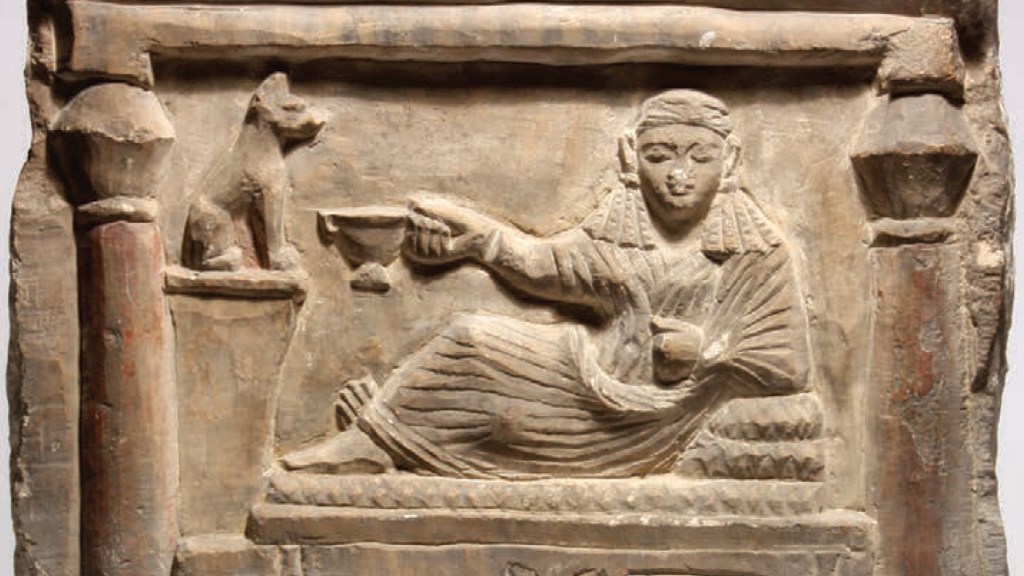
Because I felt a strong connection to her, I chose her name to represent my work and my identity in my new career. Heliodora translates to something like ‘gift of the sun‘, and derives from Helios, an early Greek sun-god – the same god from whom my first name, Helen, is also derived.
An archaeologist by background, and Saturnian by nature, I am fascinated by and drawn to the ancient world. Heliodora is a direct connection to an ancient world where astrology was respected, although as a female mathematikos she was undoubtedly somewhat unusual in her time.
I also have an enduring fascination with how astrology shows life cycles and stages. Heliodora was 52, and would have lived through all of the mid-life transits that we know of today primarily through the more recently discovered outer planets: her Pluto square, Neptune square, Uranus opposition, Saturn opposition, and approaching her second Saturn return.
She would have seen her first Chiron return shortly before she died. Chiron is a Centaur class minor planet discovered in 1977, associated with the ‘wounded healer’ archetype. So, although Heliodora would have known of Chiron only in mythology, she would have had lived experience of the entire hormonal cycle that maps onto Chiron’s 50-year orbit.
Heliodora was an unusual figure in her day. She seems to have been fortunate and educated, but it might not have been easy to be an outlier. She was a skilled and accomplished middle-aged woman. She never married – though I like to imagine that like me she may have had a female companion as well as a cat or two.
The Sun in astrology is our egoic self, and in that sense it is our life path, development and self-actualisation – our destiny (as opposed to fate). I like to imagine that Heliodora honoured her name – gift of the sun – by following her own unique path and practising as an astrologer, and that I honour her by naming my unique healing practice after her.
Further reading:
 Heliodora